판문점에서 금강산까지, 박재규 경남대학교 총장이 추천사를 작성한 이산가족 상봉 관련 실무 기록 | From Panmunjom to Mount Kumgang, a practical record related to the reunion of separated families, with a recommendation
이 글의 핵심
- 경남대학교는 8월 31일 박재규 총장이 김성근 전 대한적십자사 국제남북본부장의 신간 '판문점에서 금강산까지'에 추천사를 실었다고 발표했습니다.
- 박 총장은 2000년 통일부 장관으로, 김 저자는 적십자사 실무 책임자로 이산가족 상봉 현장에 있었습니다.
판문점이 제목에 포함된 책이 출간되었습니다.
경남대학교는 8월 31일 박재규 총장이 김성근 전 대한적십자사 국제남북본부장의 신간 ‘판문점에서 금강산까지’에 추천사를 실었다고 발표했습니다.
이 책은 도서출판 정한책방에서 출간되었습니다.
책은 분단의 시간을 견뎌온 사람들의 기다림과 눈물, 그리고 그들을 다시 만나게 하려는 현장의 노력을 담고 있습니다.
이산가족 상봉과 남북 회담이 어떻게 준비되고 진행되었는지를 당시 실무자의 시각에서 정리한 기록입니다.
판문점이라는 이름이 새로운 남북 접촉 소식과 관련된 것은 아닙니다.
현재 확인된 바에 따르면, 이 책 소식은 8월 말에 알려졌습니다.

추천사에 포함된 문장
박 총장은 추천사에서 통일부 장관으로 대한적십자사를 방문해 이산가족들을 위로했던 때를 회상했습니다.
그는 “판문점의 문은 닫힐 수 있어도 사람의 마음까지 닫혀서는 안 된다”고 적었습니다.
지난 반세기 남북관계가 만남과 헤어짐을 반복하는 동안에도 변하지 않은 것은 인도주의의 가치라고 강조했습니다.
그는 남북관계가 어려운 지금일수록 대화와 인도주의의 의미를 다시 생각해야 한다고 강조했습니다.
‘사람을 잇는 일이 곧 평화를 잇는 길’이라는 문장도 추천사에 포함되었습니다.
두 사람의 인연은 2000년으로 거슬러 올라갑니다.
박재규 총장은 제26대 통일부 장관 겸 국가안전보장회의 상임위원장으로 재직하던 2000년 남북정상회담 추진위원장을 맡았습니다.
그해 남북정상회담과 6·15 공동선언 과정에 참여했으며, 제1차부터 제4차까지 남북장관급회담에서 우리측 수석대표를 맡았습니다.
같은 시기에 김성근 저자는 대한적십자사 실무 책임자로 상봉 행사와 회담 준비를 담당했습니다.
정상회담을 계기로 이산가족 상봉이 본격화되던 시기입니다.
한 사람은 회담 테이블에, 다른 한 사람은 상봉 현장에 있었습니다.
회담장과 현장, 두 자리에서 같은 시기를 지나온 두 사람입니다.
주제 한눈에
| 구분 | 내용 |
|---|---|
| 주제 | 판문점 |
| 참고한 기사 | hankookilbo · view · newspim |
| 위키 한 줄 | 판문점(板門店)은 한국 전쟁의 휴전 협상이 진행된 장소로, 대한민국의 행정 구역상 경기도 파주시 진서면 선적리에 위치하며, 조선민주주의인민공화국의 행정 구역상 개성특별시 판문구역에 해당합니다. |
34년 실무자의 기록이 책의 핵심 내용입니다.
저자 김성근 전 본부장은 대한적십자사에서 34년 동안 근무했습니다.
그는 적십자회담 대표, 이산가족팀장, 남북교류국장, 국제남북본부장을 역임하며 남북 인도주의 현장을 지켰습니다.
판문점과 금강산을 오가며 상봉 대상자 선정, 행사 진행, 현장 조율을 수행한 경험이 책의 주요 내용으로 담겨 있습니다.
회담 준비 절차와 상봉 성사를 위한 실무진의 활동이 기록의 핵심입니다.
책 제목에 언급된 두 지명은 그가 실제로 이동한 경로를 나타냅니다.
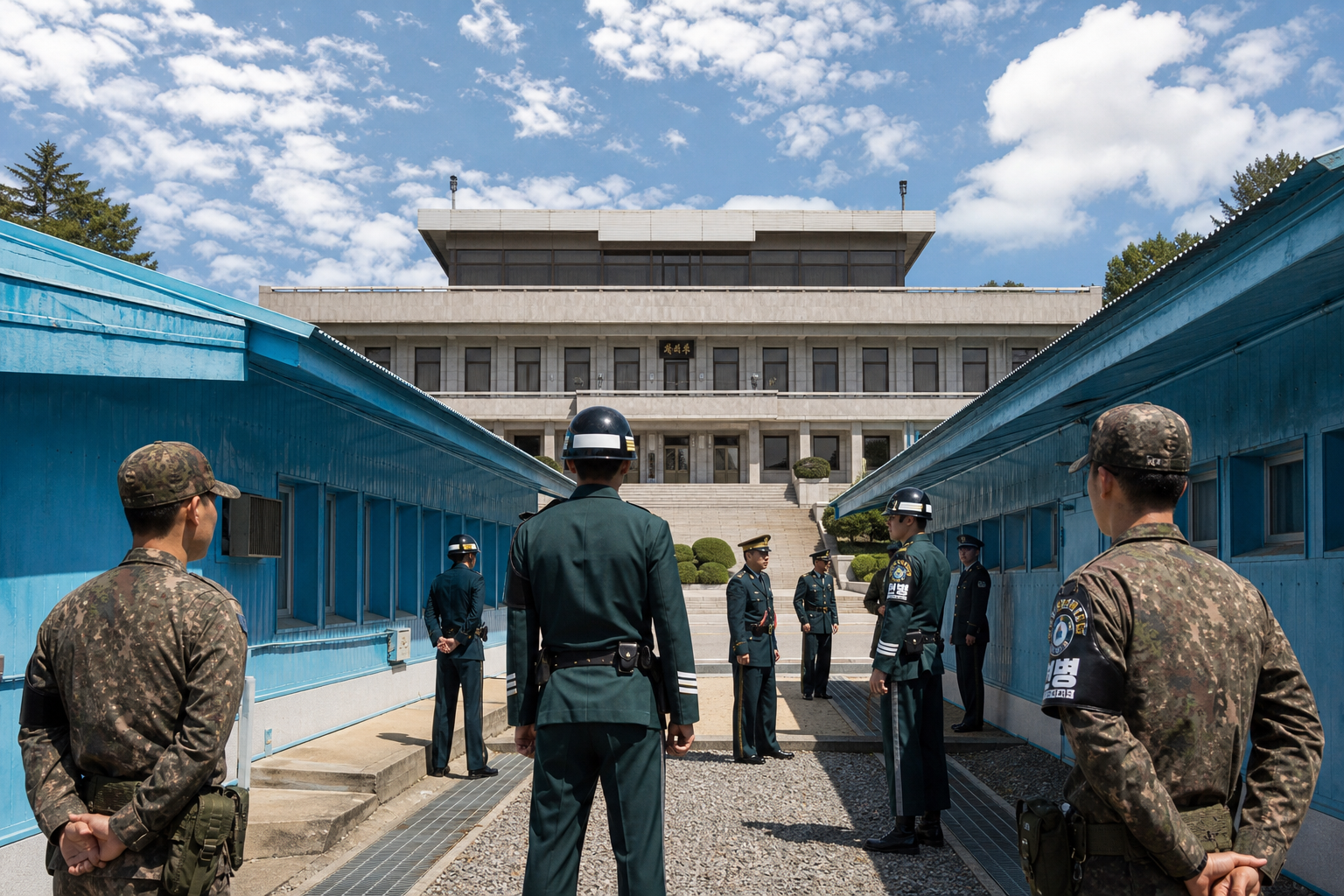
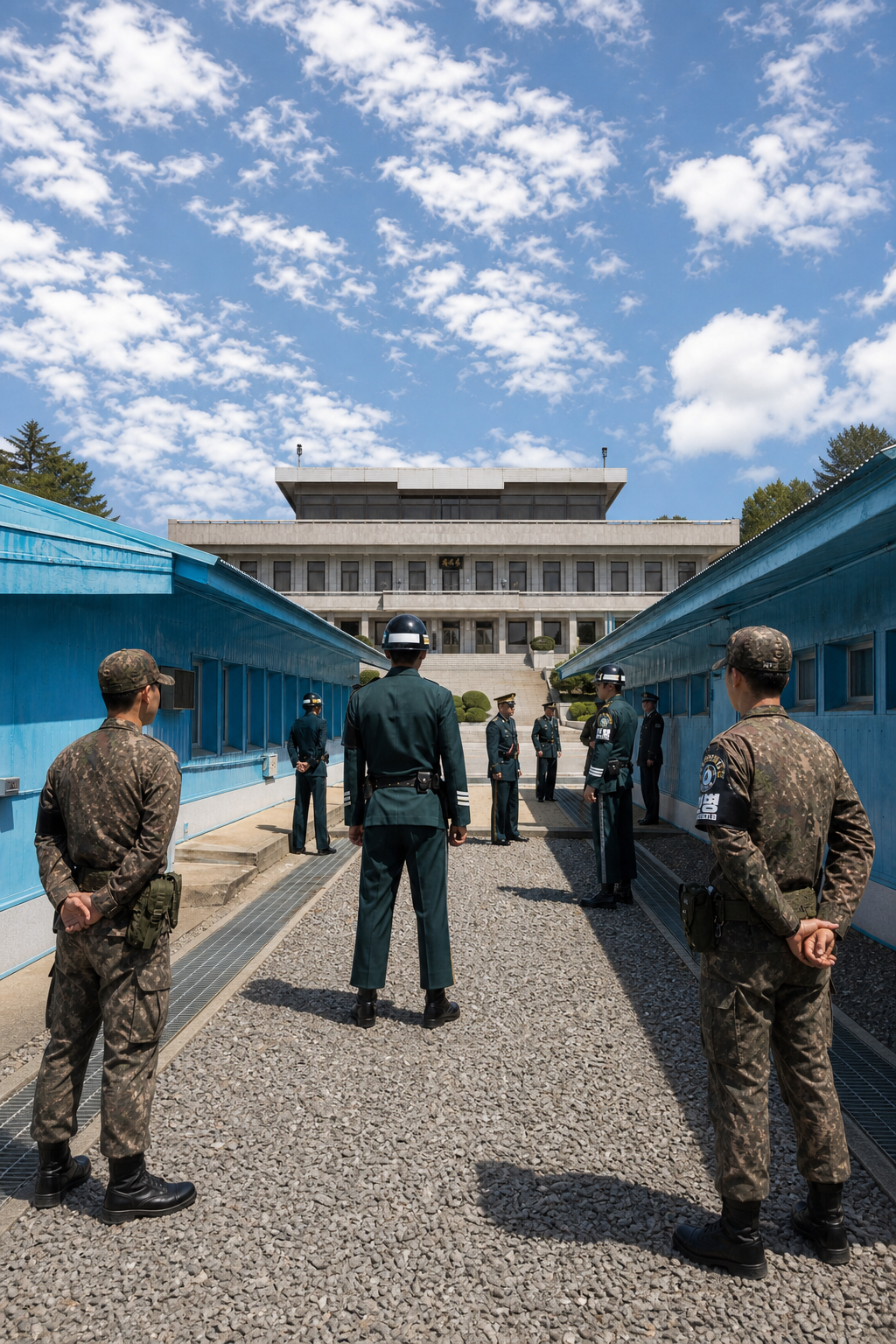
판문점은 어떤 장소인가요?
판문점은 한국전쟁 휴전 협상이 이루어진 장소입니다.
행정구역상 남측은 경기도 파주시 진서면 선적리, 북측은 개성특별시 판문구역 판문점리에 위치합니다.
정전협정 이후 유엔군과 조선인민군의 공동경비구역으로 지정되었으며, 남북 어느 쪽의 행정 관할권도 미치지 않는 지역입니다.
1976년까지 양측의 경비병과 출입자들은 경계선 없이 이동할 수 있었으나, 그해 8월 18일의 사건 이후 군사분계선을 기준으로 관할 구역이 나뉘었습니다.
2004년에는 유엔사령부 군사정전위원회를 용산기지에서 판문점 공동경비구역으로 이전하기로 결정했습니다.
이번 책 소식과는 별개로, 오늘까지 새로 확인된 남북 접촉 일정은 없습니다.
현재 남북관계의 상황을 반영한 추천사입니다.
추천사는 남북관계가 어려운 상황이라는 분석에 기반하고 있습니다.
박 총장은 대화와 인도주의의 의미를 재고해야 한다며, 한반도 평화를 바라는 독자들에게 이 책을 추천한다고 밝혔습니다.
저자는 현재 통일부 정책자문위원과 남북지역교류중앙협의회 부회장으로서 남북 교류 관련 정책 자문을 계속하고 있습니다.
이산가족 상봉과 같은 인도주의 사안이 어떤 절차를 통해 진행되어 왔는지 알고 싶은 독자에게 실무자의 기록이 유용한 자료가 될 수 있습니다.
새로운 회담이나 상봉 일정이 발표되지 않았다는 점은 구분해서 이해해야 합니다. 📘
From Panmunjom to Mount Kumgang, a practical record related to the reunion of separated families, with a recommendation
English version of the article above.
The essence of this article
- Gyeongnam University announced on August 31 that President Park Jae-kyu wrote a foreword for the new book 'From Panmunjom to Geumgangsan' by Kim Seong-geun, former head of the International North-South Headquarters of the Korean Red Cross.
- President Park served as the Minister of Unification in 2000, while the author Kim was responsible for the practical aspects of the Red Cross during family reunions.
A book with Panmunjom in the title has been published.
Gyeongnam University announced on August 31 that President Park Jae-kyu wrote a foreword for the new book 'From Panmunjom to Geumgangsan' by Kim Seong-geun, former head of the International North-South Headquarters of the Korean Red Cross.
This book was published by Jeonghan Publishing House.
The book captures the waiting and tears of those who endured the time of division, as well as the efforts made to reunite them.
It is a record that organizes how family reunions and inter-Korean talks were prepared and conducted from the perspective of a practical worker at the time.
The name Panmunjom is not related to new news of inter-Korean contact.
As of now, it has been confirmed that news of this book was announced at the end of August.
Sentences included in the foreword
In the foreword, President Park recalled his visit to the Korean Red Cross as the Minister of Unification to comfort separated families.
He wrote, 'The door of Panmunjom may close, but the hearts of people must not be closed.'
He emphasized that the value of humanitarianism has remained unchanged despite the ups and downs of inter-Korean relations over the past half-century.
He stressed that especially in these difficult times for inter-Korean relations, we must reconsider the meaning of dialogue and humanitarianism.
The sentence 'Connecting people is the path to connecting peace' is also included in the foreword.
The connection between the two dates back to 2000.
In 2000, Park Jae-kyu served as the 26th Minister of Unification and Chairman of the National Security Council, and he was appointed as the chair of the committee to promote the inter-Korean summit.
He participated in that year's inter-Korean summit and the June 15 Joint Declaration process, serving as the chief representative for our side in the first to fourth inter-Korean ministerial meetings.
At the same time, author Kim Seong-geun was responsible for the preparation of reunion events and talks as a practical leader at the Korean Red Cross.
This was the period when family reunions began in earnest due to the summit.
One person was at the negotiation table, while the other was at the reunion site.
These two individuals experienced the same period in both the meeting place and the reunion site.
Overview of the topic
| Classification | Content |
|---|---|
| Topic | Panmunjom |
| Referenced articles | hankookilbo · view · newspim |
| Wikipedia one-liner | Panmunjom (판門店) is the location where the Korean War armistice negotiations took place, situated in the administrative district of Jinseo-myeon, Paju, Gyeonggi Province, South Korea, and corresponds to Panmun District in the Special City of Kaesong, North Korea. |
The core content of the book is the record of a practical worker over 34 years.
Author Kim Seong-geun served at the Korean Red Cross for 34 years.
He held positions as a representative in Red Cross talks, head of the separated family team, director of inter-Korean exchanges, and head of the International North-South Headquarters, safeguarding the humanitarian efforts between the two Koreas.
His experiences in selecting reunion participants, conducting events, and coordinating on-site while traveling between Panmunjom and Geumgangsan are major themes in the book.
The preparation procedures for the talks and the activities of the working-level staff to ensure the reunions are the core of the record.
The two place names mentioned in the book title represent the actual route he traveled.
What kind of place is Panmunjom?
Panmunjom is the site where the Korean War armistice negotiations took place.
In terms of administrative divisions, the southern side is located in Seonjeok-ri, Jinseo-myeon, Paju City, Gyeonggi Province, while the northern side is situated in Panmun-guyok, Kaesong Special City.
After the armistice agreement, it was designated as a joint security area for the United Nations forces and the Korean People's Army, a region that is not under the administrative jurisdiction of either side.
Until 1976, guards and visitors from both sides could move without a boundary, but after the incident on August 18 of that year, the jurisdiction was divided based on the military demarcation line.
In 2004, it was decided to relocate the United Nations Command Military Armistice Commission from Yongsan Garrison to the Panmunjom Joint Security Area.
Separately from the news about this book, there have been no newly confirmed schedules for inter-Korean contact as of today.
This is a recommendation that reflects the current state of inter-Korean relations.
The recommendation is based on an analysis that the inter-Korean relationship is in a difficult situation.
President Park stated that he recommends this book to readers who wish for peace on the Korean Peninsula, emphasizing the need to reconsider the meanings of dialogue and humanitarianism.
The author is currently serving as a policy advisor for the Ministry of Unification and as vice-chairman of the Central Council for Inter-Korean Exchange, continuing to provide policy advice related to inter-Korean exchanges.
For readers who want to know how humanitarian issues like family reunions have been processed, the records from the practitioners can serve as useful material.
It should be understood that no new meeting or reunion schedules have been announced.
댓글
댓글 쓰기